Sunday, 16 September 2012

WIGGLED OUR WAY TO HEREFORDSHIRE

We have been away enjoying some sunshine (it rained as we arrived back) (and is still raining) firstly in Herefordshire and then Oxford. The garden has been left to its own devices, and those of the grey squirrels.
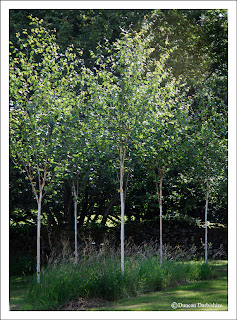
In Oxford went to the Botanical Gardens where they are experimenting with meadows and prairie like planting. This looked interesting and great for wildlife.
There was also and aged Betula utilis var. jacquemontii. Now I know how big ours will get - but after we are gone.

Just as we were leaving a load of bulbs arrived - you know the cheap sack from the wholesalers - but they do well when naturalised. (It means that I cannot cut the grass there till July.)
This is a wonderful hideaway for frogs and toads and voles and mice. The voles and mice make tunnels at the soil level and have a network of highways where they can travel unseen by the kestrel.

Having been away and having had a little time to think - it was a little as we were staying with the grandchildren (and their parents) - big plans materialised. There will be a fence and gate here, steps there, part of the stream will be tamed, the lower pond will be let go and become bog (this frees me from of digging it out), divide and replant this and that, put Camassia bulbs in the woodland shade . . . .

Talking of septic tanks the experiment of planting buddleia to hide it has worked. We did one side first and now I have put rooted cuttings on the other side. It is serviced in early March so they will be cut back every year just before that. It does mean the plastic monstrosity will be on view for a few weeks before the new shoots come but the butterflies will love the flowers.

Going to the 
Botanical Gardens did make me
think about the uses of plants - not just medicinal ones. In the bed by the house where the soil is poor and dry (well, not so dry this year) grows Roseroot, an old favourite of my mother. The sap in the roots smells strongly of roses and can be used to make rosewater even if you do not have a rose in your garden.

Which brings me to horseradish, digging up some of the root, peeling it and grating it. You may think onions are tearful but you ain't cried nothing yet. It can be stored for the winter roast beef, to have with fish and so on.

It is also time to collect mint, chop it and store it - I do this in jars with vinegar. Then it can be used when needed with a little water and sugar for the mint sauce. You can put the leaves in a plastic bag and freeze them. Take the bag and crush the contents - they crumble in the hand. A plant can be dug up and kept through the winter on a kitchen windowsill or leaves can even be frozen in ice.
In fact freezing a small piece of lemon with a borage flower in a cube of ice is a great way to decorate you winter sloe gin and tonic.

The roses are heavy with hips. I suppose no one makes rose hip syrup now, just uses the insides as itching powder.

Time for a scratch.

Sunday, 9 September 2012

IT CAN GET WILDER


But slowly.
Go away for a while - and the grass is a bit longer, some new weeds grow, some flowers go over but the wild garden is unchanged in such a short time.

I have extracted the watercress from the top settling pond - built in a vain hope that the silt and mud washed down the stream would stay there and leave the bottom and larger pond unclogged. The last of the candelabra primulas have been dead-headed and the seed sown - best when fresh. I would like the whole hedge ditch full of them (sort of Harlow Carrish).
The land between our track and the field fence belongs to a local Town Trust and is rented to a local farmer. Though the lambs escape earlier in the year and dine on the grass, later a lot of it is taken over by thistles and nettles - but not all. One banking by an elder tree is covered in yarrow and harebells. I have been out with the sickle cutting down the nettles and thistles - but too late as usual - seed is set.

The House Martins are still returning to the nest for the night. This is above one of our bedroom windows and in the early morning, cup of tea in hand, I can sit in bed and watch them flying in and out. Yesterday I filled in their details for the BTO survey. Up to now they have always nested at a nearby house but last year they painted their walls and woodwork destroying the old nests. So a search was made for alternative accommodation and we were chosen.

On the path to the Wendy House we have an old log pile - this has been unused and is now some 7 years old - a wonderful habitat.

If the paper says once more that the heat wave will be soon over I shall scream. What heat wave. True we have had a little less rain and it has been warmer but heat wave?!
Even the pheasant has been bedraggled and birds have had to shelter where they can.

Now I am planning winter jobs - not just muck and digging but more the paths will need rechipping (is that a word?), some repairs will be needed to walkways and the stream needs revising. I will also have to think about drainage. (I would not have to if it had not rained so much this year.)

Plans are afoot for transplanting crocosmia thinnings onto wild bankings to keep grass down and for variety. When I dig up overgrown perennials I cannot just throw away the unwanted material - it goes somewhere - or other - a remote overgrown corner where suddenly the grass is topped by japenese anemones or sidalcea.

The sky, so blue this morning, is darkening again.

Tuesday, 4 September 2012

A SENSE OF WINDING DOWN


The garden I mean, not the gardener. He wound down about 66 years ago.


As I watch a coal tit take seed from the feeder outside my window (and probably burying it)(and forgetting where it is)(yes, they do that just like jays and squirrels) I note that the weather is set fair(ish) for the next few days.
R weeded, D planted 17 buddleias grown from cuttings on the top banking. There have been so few butterflies this year.
The coal tit is back, has chased off a chaffinch, and is throwing out any seed that is not perfect - until it finds one just right. No wonder the feeders empty so fast.

The winter broccoli is planted - for harvesting in early spring - yet the leaves on some of the raspberry canes are yellowing - put on lots of manure and stuff to make sure no mineral deficiency.

The wood has been quiet but this morning I heard the rooks - they have returned to the tall trees next door. (The Archers can go up on Lakey Hill again.) (English radio programme).


There is a sense of autumn in the air - some leaves are starting to turn, teasels are in seed (can tell by the goldfinches feeding on them).
The Magnolia grandiflora has not flowered again this summer and neither has the Eucryphia - which did last year.

This morning dug out a ditch by the copper beech hedge (young and growing) as the surrounding area is waterlogged - phew!

The raspberries are actually looking decidedly ill - leaves curling and yellowing. I think we have the virus. They may have to be dug up and burned and then new canes planted somewhere else. We love our raspberries but they may have to go. Now the dilemma - do we wait or get on with it?

The house martins are still returning to the nest though well fledged - a bit like children?

A huge box of cheap grade z daffs arrived today for planting under the grass in the bankings. I have tried the bulb planters but find the best way is to roll back a good turf, scatter and roll it back. The turf does need to be thick enough.

The forecast is dry so we need sun and wind to ease the wetness - in fact we need a dry three weeks at least - Ha! Ha!

I often end with time for a cuppa tea but as I am going out - time for a pint of Wainwright.

Tuesday, 28 August 2012

WHY WAS­ I NOT BORN WITH WEBBED FEET?


Presumably because I am not a duck or a frog.
Good day/bad day, dry day/wet day, what next?

Finally got into the garden this morning and put up the buzzard - it was sitting on top of the bonfire - (not lit). R cut back the remaining geraniums and tidied well whilst I trimmed the santolina - taking heeled cuttings as usual - and cut down the lovage.
I saved a few stems for drying and making into pea-shooters for the grandchildren. Won’t I be popular!
Some of the plants in the garden are huge this year. The Japanese anemones are six feet tall and the cardoon is ten feet high and growing.
Now, I said that we had no damsons - well, we have three and a half (a small one). Not going to be a very big crumble though, nor will the three Bramley apples. Still, we had over 20 pounds of blackcurrants and loads of raspberries.

Then I began the heavy job of moving compost.
We have three compost bins, one with two bays and about three grass heaps. Today I emptied one bay and wheeled it down to a heap at the far end of the garden. Then I moved the compost in the remaining bay sideways mixing it well. All the time I was forking away I was followed by our robin - it waits for me to turn the soil and then searches for food.

Today we found that the main path, a hoggin one, has developed a gelatinous fungus - a curious revolting thing, shuddery to touch.

I cannot mow the lawn - there is still standing water in the tracks from the mower wheels and I do not want to do more damage.

We have three large plants growing wild in the garden - most abundant is the Wild Angelica, then the prolific Teasel loved by goldfinches and lastly the nasty Hogweed. Beware the sap of this plant - it blisters worse than that of Rue - I know - I strimmed with sleeves rolled up and paid the price.

And the giant pumpkin - big as a kumquat - it fell off in the last downpour.
This is not a pumpkin (or fig) year.

Tuesday, 21 August 2012

THERE I’VE SAID IT AGAIN


THERE I’VE SAID IT AGAIN
(Vaughan Monroe, Bobby Vinton)


After 278 blogs I am repeating myself. This is not surprising as the garden goes round with the year and things come back again and again.

So I apologise if I say things more than once, like, I have been attacked by a horsefly AGAIN! - AND IT IS RAINING - what a summer! I know I go on about the rain but it really has been an awful summer. (Unless you are a rhubarb plant.) (Or a bog one.)

The garden is full of birdsong once more and the birds are queuing at the feeders. Mrs Pheasant wanders around with her four offspring. The other morning she sat down in the grassy centre of the track to he house. R was on her way out in the car. The bird, grudgingly, moved and the four chicks emerged from her feathers and skittered about before diving after Mum into the undergrowth. Just noticed the house martins are beginning to build again under the gable end - seems a bit late to me but I suppose there will give them a ready nest next year. If I go out of the kitchen door I am assailed by swallows as they try to chase me away from the nest above me.

An extract from this blog has appeared in The English Garden magazine on the Wiggly Wigglers page - about jam and chutney making. Ah! Fame at last.
Just got my Wiggly pack and the birds have got the seed - Thank you!

Fruit - this year is a damson, plum, greengage, pear disaster. Hot weather in March, then frost in April - nothing has set. The outdoor tomatoes have flowers but no fruit either - virtually no bees around to pollinate them. Or is it just too wet?

Despite providing flowers for my son’s wedding at the end of July the plants have recovered. (We did not have enough sweet peas then but were allowed to raid G and L’s garden as they were away - thanks to them for saving our bacon.)

R asks me what she can do in the garden - well, everything! No, that is a bit mean, so she has done a great job weeding the asparagus bed and the veg beds.

Now, how is this for a hobby - ditch digging! It should be in the Olympics - ditch digging and hedge-laying? and ploughing? Have just cleared out the channel between the pond and the Wendy House (for the uninitiated the Wendy House is an insulated wired up shed R uses for writing and doubles as a cheap spare room with a sofa bed.) This is heavy work and tough for an old codger so have to have a cuppa after a welcome shower.

Talking of showers - as I consistently repeat myself with the word RAIN I will correct that for today.
The sun is shining!!

(More precipitation due tomorrow)

This is tomorrow - the lawn is growing and IT IS RAINING!


Friday, 17 August 2012

LAWN CUTTING AVOIDANCE COMPLEX


This is, of course, Meadowsweet which grows abundantly in the wet areas of the garden. Its scent is heady but it is prone to mildew.

Which brings me to wet.

It is raining again. The paper today announces a heatwave - get the barbecues out - but only for the South East. Hey you journalists, there are other people living in the UK. In fact more of us live north of Watford then South of it.
It always amazes me how, on the BBC forecast, they whizz up the east coast (or down) round Scotland, to N.I., Wales and the South West, along the channel and back to the Midlands and East Anglia. Nobody lives in North West England (let alone the Isle of Man).

Back to gardening - I have been down in the bottom corner clearing out the lush growth from the streams - watercress by the armsful. (Is there a word armsful or should it be arms full?) (Prefer the former so there is a word armsful now - take note OED) I have decided to start at the lowest point and work upwards through the ponds.

One side effect of working there is wetleg.
(Another new word.)
So far the wellies do not leak - but the trousers do.

My boardwalk made from cast off scaffolding planks is beginning to crumble. Odd planks are giving way and I cannot face replacing them all.
So it is patch and mend, stick new old planks on top of the bad ones. This will mean more chicken wire around each plank as they become very slippery when wet.

Now, talking of rain, sometimes it freezes and I took this image the other day - in summer. Sadly I missed the weed growing under the wisteria.

Finally to the disease mentioned in the title of this blog - LAWN CUTTING AVOIDANCE COMPLEX.
I am not an obsessive compulsive mower and edge trimmer. As my wife sometimes hints - I like the wild and disorganised look a bit too much. I do have and Armani suit which I wear once every three years but am usually a bit frayed at the edges, cuffs (sleeves rolled up like my Dad did) and collar. Comfortable rather than smart is the motto and this also applies to the garden.

Ah! Yes - mowing, I put it off yesterday and luckily the grass is now too wet.
It is time we had a drought so the grass stops growing and I have no dilemma - should I, will I - etc?

On a lighter note - the house is full of sweet peas. I am picking almost every day. The scent is glorious. I have kept their predators at bay this year.

I must go to Harlow Carr outside Harrogate (RHS), they have a sweet pea bonanza going on, and drown in the scent - if it is not raining or the lawn needs mowing.

Saturday, 11 August 2012

ANOTHER FINE MESS I'VE GOT ME INTO!


This is the lower garden down by the Wendy House looking up from the decking. The rail is by a footbridge and then a boardwalk meanders through the swamp. (Well, boggy area.) On the left are irises, white valerian and candelabra primulas, in the foreground alchemilla and beyond the rail is a pond, not that you can see it for growth at present. Another fine messy job I've got me into!
Not only the pond needs digging out but the various streams, the hedge ditch, the other pond and so on.
The land down there is so water logged that the amelanchiers have gone autumnal, (red leaves in the centre right), and then shed the lot.
The hedge to the left runs the length of the garden and is regrowing well after having been laid.
Other plants in this area include water cress (bane of my back), both plain and variegated flag iris, marsh thistle, ragged robin, assorted loosetrife, comfrey, pendulous sedge (beware it seeds itself everywhere and is a thug), hostas and euphorbia characias ssp Wufenii amongst others.
The pond is WILD! This means it is left to itself for most of the year and then brought back into the fold before it gets too out of hand. (As it is at the moment.) It is full of water snails, caddisfly larvae in their little houses, boatmen, pondskaters, damsel flies etc.

Now to grub - these are the last of the broad beans - disappointing but with the weather and lack of bees to fertilise them, not too bad. Carrots are coming on and one turnip left, a little netting has protected the Brussels Sprouts from the worst of the cabbage white butterfly caterpillars.

The wild bank is truly wild and the long grasses backlit in the evening are a delight.

Now I hate to throw anything away - most can be used somewhere, composted or, as a last result, go on the November bonfire. (The ashes then go on the blackcurrants as a good source of potash.)

As a poor artist I had a lot of rather rubbishy paintings on hardboard which had been waiting for some time to be useful. When I built a lean-to woodshed a year or so back I needed a wall of some sort and, Voila! or Eureka! or whatever - a hammer and a nail or two and my paintings were of some use after all.

As we are having a short burst of summer it is time to return to the garden whilst I can. No excuses are left - the sun is shining, or at least it was before I came in to write this blog - now it is cloudy again.

R is in her writing house tapping at her keyboard - time for the waiter to bring her tea and a biccy. (Moi!)
Will I get a tip?
Probably something like - 'It is better if you don't let the teabag soak in the milk before you add the boiling water.'

Sunday, 5 August 2012

THE SKY IS FALLING, TURKEY-LURKEY - AN EMERGENCY BLOG

I thought summer had come as we ate our lunch in the garden - but that was not today.

The final broad beans were harvested, the bed dug over and raked and a rather late attempt to grow beetroot made. Last crop of black currants put in the freezer, old raspberry canes cut out, supporting posts and wires repaired and plants manured to stimulate new growth with well rotted horse manure from the stables outside our gate.

I cleared out the hedge by the wendy house and received a beauty of a horsefly bite to my left arm - they obviously objected to me taking the manure.

R deadheaded and pruned the senecio (the thing with a new name now) and the remains of its yellow flowers. Then she went down to the Wendy House and sat on the decking writing.
There were butterflies at last, unfortunately including the whites - brassicas beware - and the wild bank is now showing toadflax, corn cockle and henbit amongst other things.


Today began calm but milder than late and it looked like the sun might get out. Then a rumble of thunder and THE SKY FELL - not a turkey-lurkey nor a chicken-licken to be seen. It poured down and then, as if that was not enough, it hailed.

I suppose we are lucky it did not snow.

It was torrential and washed away my feeble stream crossings - just a load of old planks.

The leeks, grown in trenches, were in standing water and much of the manure, so carefully placed by the raspberries yesterday, was off to the sea.

British weather - no wonder we talk a lot about it - there is 
plenty to talk about as one never knows what is coming next (except rain) (but that is why the country is green). 

The Global Warming pundits warned that the north of Britain might get colder and wetter - they may well be right. The Olympic Games Committees have missed an opportunity - a Gold Medal for guessing what the weather will do next?

I wonder, after all the palaver in the spring, what I should do to conserve water?

Friday, 3 August 2012

AS SMALL AS A KUMQUAT

I have been experimenting by trying to grow pumpkins and such on the edge of the old horse manure heap. I have fended off the slugs and snails with flowerpots, bottoms removed, upturned and banded with copper tape. The plants are growing, very slowly as we have had no sunshine or warmth (till a little 20C yesterday)(rained again last night) but I have succeeded in getting a pumpkin to set. The only trouble is that it is the size of a kumquat!

The raspberries are over except for a few and the birds will have those. We are eating turnips and broad beans and are swamped by black currants.
I have frozen them, jammed them, made cassis (yum!), bartered them (for eggs) and given them to friends.
Not got to jelly yet but that is a bit of a palaver. I would have rather had red currant jelly but the birds got to the fruit first.
Rhubarb still doing well with the rain, leeks look great and we have sweet peas at last.
Took some to my hippy sister in Kendal yesterday and used some in the flowers we did for my son and his now wife's wedding a week ago.


I am gearing myself up to one of my favourite pastimes - digging out ditches - it has to be done but I will be covered in mud and wet and tired by the end of it - perhaps tomorrow.
Down by the pond the irises are over but their leaf blades contrast well with the rambling mimulus and watercress - in fact watercress everywhere clogging up streams and ponds. Beside the pond the loosetrife is flowering - the deep pink wild purple one, the pale version and the yellow by the hedge.

I have begun to chop back the alchemilla before it seeds everywhere - it does this far too freely.

I keep telling the swallows nesting under the covered area outside the kitchen door that they do not need to fly from the nest every time I walk out. Clearly they do not speak English. The same cannot be said for the grey squirrels - it only takes a stentorian, "I can see you," from me and they are off up the trees.

I have tidied my shed, a little, and found three containers full of engine oil, three for cleaning car upholstery, and now have some space - had actually, as it now has a large television stand occupying a disproportionate area of floor - from my son - can you just store it for me, I will put it on ebay.

We have three sheds - one for the water tank from the borehole where I keep hosepipes and stuff, one with mowers and flowerpots and a bench and one with a small mower and more of my two sons' 'stuff'. Down by the pond we also have a Wendy House - well a shed where my wife writes. We needed more space and putting in this insulated shed was the cheapest option. There is a small area of decking between it and the stream - a sun trap - if we ever get to see the sun again.

It is not raining.
I have to go out in the garden to justify doing little for the rest of the day.
I think I will walk up into the wood where sudden sunlight has lit up the long grasses.

Tuesday, 24 July 2012

A ROSE GROWS WILD IN THE COUNTRY


“A ROSE GROWS WILD IN THE COUNTRY”
                                    (Words and music - Peretti/ Creatore/ Weiss)


First, a statement of fact - I have been berated today for pontificating on how perfect our garden is when she tells me I am idle and she wants order, not weeds and more change as I cannot keep up with what we have. I use the continuous rain as an excuse - yes, it may be a heat wave in the south but “up north” “Still falls the rain.”
Back to being berated - so what do we do - fence off chunks and leave them to do their own thing, get someone in to strim and stuff, stop playing so much golf and sitting in front of this computer, messing with photographs and churning out blogs?

So to another blog - I have weeded the veg and fruit beds and cleared grass from the shrubs on the banking as well a violently pruning the huge broom so can justify a little blogging.

Now we are well beyond the daffodil damage time - do not cut back the leaves of spring bulbs and corms until they are over or next year’s show will be much poorer as the plants will not have time to build up reserves - we can strim the long grass. (Or someone else can.)
One Council not far south from here planted thousands of crocuses in the grass strips between the road and pavement on the road leading into the town. Then they mowed them as soon as the fantastic display was done. Next year the show was poor and finally zero. What a waste.

Now, I have inadvertently strimmed trees and killed them (wrists slapped) by effectively ring barking them. (Taking a strip of bark from a tree trunk all the way around will kill all growth above that point.) The lads working on our local golf course regularly kill young trees by doing this. Sigh!

 Some local Councils have sense and only cut back verges enough to ensure safety for traffic and leave the rest - a wonderful habitat for all sorts of flora and fauna.

Wild plants thrive in the garden, some in the wood, in the bog, in the pond, the hedges, on the grass bankings and some in the flowerbeds. Foxgloves seed themselves around the beds and are welcome - spectacular plants wherever they are (in moderation) - and they grow in the woodland. Amongst the trees and in the long hedge there are wild dog roses (which I do prune when they get out of hand - you can be ecologically sound (whatever that means) and still exert some sort of control).

We have the wild Alchemilla mollis (Lady’s Mantle) as well as the garden kind. There is a difference - the leaves of the wild sort are not so hairy and the plant is less bulky. The third sort - Alpine and much smaller - we do not have.

When, years ago, I worked in Southport (it was YEARS ago), and my wife worked in Woodvale, she used to take the back road from Pilkington Road, where we lived, and this ran across an area of waste land covered in tree lupins growing wild. They were yellow and for some years, in previous gardens, we grew them. In our current garden we have the white variety, which can be very beautiful. R says she does not like the way it turns pink/mauve as it ages. We also grow Evening Primroses for their wonderful yellow. They grow all along the shore and dunes around Southport.

Some weeds were once medicines - time for a poem.


WOUNDWORT

i

In the marshy edge,
where vegetation hesitates,
Woundwort sends spires
of pink through the shade.
The hollow stems are brittle
and, if crushed, smell strongly.
Its leaves are nettle-like
but have no sting.

ii

In Kent a poor man scything Peason
sliced his leg to the bone..  He crept to
some Woundwort, bruised it with his rough hands,
tied a bundle ‘round the gaping cut
and secured it with a piece of shirt.
Day by day he poulticed it with stems
stamped in lard - was cured.  Gerard saw this,
and thought that he had found an all-heal.
                       
iii

Mr E Cartwright of Graye’s Inn, Holborne,
who had been thrust through the lung and stomach
by himself, was found dying in his bed
with a frothing discharge staining his shirt.
John Gerard, herbalist, gave him drink, found
one wound leaked - the other snuffed a candle.
He took the leaves of All Heale and stamped them
with hog’s grease, strapped a tight poultice
to the chest of the injured, healed him.

iv

In the woodland edge,
Woundwort is a wild flower.
Flowers, six round the stem,
taper to the top; long
lower lips kissed with white
bend under bee weight.
Once it was a cure,
Gerard’s all-heal.

(after 1.  Geoffrey Grigson, The Englishman’s Flora,
            2. John Gerard, Gerard’s Herbal.)


I suppose growing up on a Lake District farm and roaming wild, plus an interest in botany from my pram years, (thanks Mum), instilled a love of nature. Days spend creating tunnels in high bracken, mucking about by the lake or in becks, climbing hills or just wandering in the woods must have influenced me.
I like to take a little of my childhood (R would say all of it) with me as I get older.

So, there you are, I do not need to return to my childhood as I age, I never left it!

Thursday, 19 July 2012

7 JAYS AND 4 RABBITS AND LOTS OF RAIN


Yes, that is right.
Rabbits have increased by one - which seems to mean our invaders (actually boarders as they have a burrow somewhere in the bramble patch) are poor breeders. I wonder if Brer Fox has been in the bramble patch?

As to the jays they are everywhere cackling and squawking like a load of witches from That Play. In fact they are timid if approached - twitchy witches.

So, rain on Monday.
Tuesday deadheading and I collected a load of aquilegia seed and sealed it in a brown paper envelope.
Whilst picking raspberries R came across a triffid nettle five feet high which bit her, I pulled out two stout stems and I was stung.
I also collected blackcurrants by the handful so I could pick them over whilst watching the TV in the evening.
Some of the raspberries are now jam, the rest eaten with meringue and ice cream.

Wednesday it rained all night and the garden was soaked and squelchy. The rain eased early and later in the day and we cut back all the aquilegia stems and weeded and deadheaded and trimmed as we went.

The first, yes the first, sweet peas are in a vase and smelling heavenly. 
Suddenly there seem to be more bees in the garden - it is a pity they do not eat slugs and snails. My new attempt at a delphinium came to an abrupt halt yesterday when something mollusc assassinated the growing stem.

We are watching our flowers and praying they will come right for next week as we are providing small decorations for the tables at our son's wedding.
So, naturally I give you a multiple image of borage (not suitable except in a Pimms or G and T), Alliums (now over) and a mixture of honesty and wallflowers (also over). It is just that I had these pics in my Blog file and thought I would use them.

Some plants are getting too rampant - Mimulus in the pond and stream, a white campanula in one of the main beds and japanese anemones all over the place. I must remember to deal with them in the autumn. I do not chuck them away but try and find a corner where they can do their thing without me worrying.

Time to nip out and gather some more blackcurrants to distract me from the tv.
We had our first broad beans last night - yum! 
It is amazing into what horse manure can be turned!

Saturday, 14 July 2012

A JAM SESSION


So the wife’s away and what do I do?

No, you are wrong.

Raspberries will rot if I do not make them into jam - recipe in Mrs Beeton and a year or two ago on the blogspot blog.

And the old plums and apple in the freezer need to be used so space is ready for this year’s crop. Mind you I think some of the fruit in there is from two years ago. We do not eat it fast enough to keep up with supply.
So add an onion, some raisins, ginger and chillies, sugar and salt and we end up with Chutney.

Delia S. has a good recipe called Old Doverhouse Chutney.
Then, after jarring it, (not really bottling), it should be left for at least three months to mature.

(Do you like the Cow tray?)

I keep picking blackcurrants and freezing them, the broad beans are nearly ready but the beetroot is very poor this year - I seem to be having great difficulty getting them to germinate.

And it keeps right on a-raining, every minute every hour. Having said that, as I sit here typing out comes the sun.

This morning there was a terrible din behind one of the sheds and what should I find trapped there but a jay! I rescued and released it (put on some tough gardening gloves first) and what a kerfuffle! They are fantastic close to - British parrots, I think, is an apt description - and all the rest of the day the bird has been recounting its escapade to the rest of the family in the big trees next door. What a row!

I do have a habit of using things in the garden that, perhaps, should be binned. A few years ago I bought a couple of white Polish (it said so underneath) dining chairs and put them up in the wood.
No one sat on them and they gradually rotted away and ended on the autumn bonfire. Odd things hang in trees like old goggles and broken wind chimes. At the base of one rhododendron pruned to grow on a single trunk is a sheep’s skull.

And the dark wood is lit by two Rambling Rector roses in full bloom - their white flowers tumbling in masses in the half shade. I can see them from my window - as I can see that everything needs dead heading, weeding (broad-leaved willowherb everywhere this year).

Then I see it is half-past four and the skimmings off the raspberry jam are waiting to be eaten in the kitchen. The kettle and a mug are waiting too . . . 

Sunday, 8 July 2012

SUN AND RAIN AND CLEGS


We have had sun and warmth - collapse with shock, moan that it is too hot and then dive for cover as water is everywhere.

Mowing the lawn yesterday for the first time for almost a fortnight because of the rain, I had to avoid the lower garden and the areas where springs miraculously appear. 
Then the dreaded CLEGS struck and sucked my blood. If you have the benefit of horse manure in the next field - hence horses - you have the down side of Clegs, (horse-flies for the uninitiated).
These hungry insects are, of course, in no way, politically inclined. They will bite a member of any party.

So the squirrel trap is set and has caught nothing. The bait has gone but no trapped prey. I suspect the mice have been in and out without setting the thing off. Then, looking on the Internet I found that Grey Squirrels are classed as vermin. This means I have to kill them and cannot release them into the wild again. (So, if I do trap them I will not be telling you). This does not mean I have killed them or released them or . . . . . . 

We are eating raspberries - the best of all flavours? - Though run close by blackcurrants. These are also coming into ripeness and it looks like we will be swamped. Branches are bending with the weight of fruit. I have picked the last of the gooseberries and, topped and tailed, they are snugly tucked up in our freezer.

In the wood, in sunshine, with water on everything, the light is astonishing and magical.

In the garden the oriental poppies have succumbed to the wet and have been cut back to ground level in hope of a second flush in the autumn. The huge crambe is over and cut back. This is also being done with the geraniums so that there will be regrowth and a second flowering.

There will be no figs this year with the weather so bad but there are leaves - you never know when one might come in useful.

In the garden some garden plants will naturalise themselves - survive and compete with the wild plants. Examples in our garden are Acanthus, Geraniums, Oriental poppies, white willow herb (not as vigorous as the wild pink variety) and, on the top banking, sweet williams. I am not sure where they came from but now there is another patch to leave till the autumn.

I have had to go up the back field to inspect where the field drain enters the garden. A previous farmer just drained his land through our fence, (when the property belonged to TJ.) The cows and sheep had trampled the channel and the water was running off to the north-east before entering the garden and flooding the path lower down. I dug it out and replaced the stones moved by heavy animal feet.

Now, my son is here from London and has said I should put more how-tos into the blog.

Time to explore how-to make a nice cup of tea.

Tuesday, 3 July 2012

PLASTIC IN AN ECO GARDEN?!


Yes!

Big Coca Cola bottles and similar ilk with the bottoms removed make fine mini cloches, at the same time keeping predators at bay.
Milk cartons with the top cut off are great to fill with seed and take out into the garden to fill the bird feeders. You can actually make feeders from them but the squirrels here just tear them apart.
We have eight feeders at the moment plus the compost heap - robins like to forage on the latter amongst the kitchen scraps. We do not use the council garden waste green bin as we recycle everything in that field ourselves. The green bin is used as a water container by the veg. beds.

Two of the hanging feeders contain black sunflower seed, as does the one attached to the kitchen window. Five have peanuts. We buy our seed and nuts in bulk from a local farmer’s supply warehouse. I did try the mixed seed but the birds picked the ones they liked best and threw the rest on the ground. As a consequence there grew some unusual plants!
At this moment the peanut feeder outside my window has two juvenile great tits, one young cock chaffinch, a cock greenfinch and a coal tit on it - and it is raining.

Sheet plastic, if black, can be used to clear an area of weeds - black bin liners held down with stones will do but heavier duty stuff is better.
We also use a sheet of pond liner (we have no liners in our ponds)(so they do leak a bit) as a water slide down the banking for the children, both young and old. (We are not wasting water, as we do not have a shortage (borehole)).

I have used old fishing net found on a beach to aid a climber go up a tree but it is a bit too gaudy.
I have avoided plastic edging to paths using old branches off trees, old scaffolding planks and such instead. I had to be careful with the branches, (and wasn’t enough), because we lost a mature ash tree to the dreaded honey fungus. We then chopped the wood up for logs for the wood burning stove and left them in a heap near the manure heap - ERROR! The logs sprouted toadstools and the bootlaces of the mycelium spread into the heap. We had to burn the logs in a bonfire and even now I find traces of black cords in the manure - these are carefully removed and placed on the bonfire. The manure is never used anywhere near shrubs and trees but seems to be ok with the veg.

I wander from the subject - Plastic.

One of the most useless pieces of plastic I have come across was as a blade on a small hover mower in the days before this garden when the lawn was the size of a pocket hankie. They lasted no time at all. I have tried to make replicas from old cans but they are not very good. Any way that mower has been retired - but, as with many things - put in a shed. You never know when it might be of use?

Finally, I do wonder as to whether there is a connection between plastics and a disease such as cancer but plastic is ubiquitous. At least many plastics could be made biodegradable - couldn’t they?

The Senecio greyii, now called Brachyglottis, what a mouthful, are in full flower and spectacular.

They would look better if the sun was shining.

Sunday, 1 July 2012

SLUGS AND SNAILS AND SPIDERSQUIRREL


So what does a green gardener do about snails and slugs?
Options - slug bait - not on, nematodes are much hassle and expense and how green is infecting the poor molluscs with nasty parasites? Then there is the squash 'em idea - mmm! Lastly bucket - pick them up, pop in a bucket and take them a long way away. If you only go a hundred yards they will return. Lastly cultivate blackbirds and thrushes but they can only stomach so much food, sadly.
Of course having toads and frogs in the garden is a bonus but there seems a never-ending supply of the slimy veg. eaters.
Our wet climate and mild winters are not good news - when we had the two hard winters the numbers especially of slugs was much reduced.
Last year I had slugs feeding on the runner beans eight feet off the ground!
My brother as a small boy would line up slugs on the ground and walk on them with bare feet - not a control method that would appeal to most people.

Let me move on - caterpillars - butterflies are beautiful and we have our nettles for the peacocks, red admirals etc and garlic mustard (Jack-by-the-hedge) for the Orange tips but the whites are a problem on the brassicas. Does one rub off the eggs and if caterpillars are removed do you squash them or throw them as far from you as possible hoping they will go elsewhere?

Poor old vegetables have a rough time but, I think, I have found a way to avoid carrot root fly. I knock out the bottoms of big plastic containers - the sort you can buy pelleted hen manure in - and place on fertile soil, fill with a sandy loam and sow into the top. The sneaky fly zooms along like a cruise missile just above the soil surface but misses my carrots nine inches up in the air.
Well, it has worked so far.

I use lots of netting to keep the pigeons off the seedlings, the birds off the redcurrants, the butterflies off the broccoli and so on. Keeping the wood mice out is another thing altogether and they just munch away.

Now to SPIDERSQUIRREL - I have discovered why we have no fledgling house martins. This morning I looked up at the nest 7 metres up under the east end gable and there, clinging to the wall was a squirrel. It ran down the wall (coloured render) and around the corner at two metres from the ground with me giving vociferous chase.

How does it hold onto the wall?


So it is either a gun or a trap - I have bought a trap - or should I let nature take its course and the house martins lose their young, let alone all the other birds in the garden.
A trap - and garden, no matter what its description may be, is a managed space and I am not a killer. So trap them and deport them - a long way away.
I know you will say that other squirrels will come in to fill the vacant space - true - but they are going to get deported too.

And I promise to release them well away from any garden.

Thursday, 28 June 2012

WHAT IS AN ECO-GARDEN?

This is a way to the wood, it meets the steps at the far end. on the right is a mature ash and an elder with a Rambling Rector rose climbing into the upper branches.
Also on the right are brambles and ground elder - tolerated but kept under some sort of vague control.
The wood is full of campion and foxgloves in June.

Enough - what I really want to talk about is - What is and eco-garden?
I have no windmills, solar panels, ground-source heat pumps, most of the garden work is done by hard work and well-rotted horse manure.
I do have machines - mowers and strimmers - but they are necessary for I would need to pay gardeners without them. Having said that I did succumb last year when not so fit to having a strong man strim and clear the bankings and wood (not the wild nettle and bramble beds).
I allow wild flowers and grasses to flourish in selected areas so with the wild we also have some lawn, flower beds and veg and fruit beds.
The garden is a compromise between anarchy and control - neither winning.
I suppose the 'eco' bit means ecologically sound? But to which ecology does this apply - eco and organic are not the same thing.
This leads on to the term 'Green' and all that that conjures in the mind.
In the end all one can do is try to give more to our planet than we take, protect more than destroy.
So, if we get on to the bigger picture the greatest problem the planet faces is us.
We are the plague that threatens the world - come on politicians, address the population problem rather than ignore it.
If the population of Britain was 25 million we could be ecologically sound, self-sufficient, cease to rape out world.

Enough ranting - this is an image of the side of one of my compost heaps - a living willow fence. I know - it might draw much of the goodness from the heap but it is attractive.

Todays news is flash flooding with the stream bursting its banks in several places and total failure in chasing off the squirrels from the bird feeders - it consists of me shouting through the window, "I can see you," and the animal(s) retreating for 5 minutes and then returning - I give up.
The top banking is full of goldfinches and the sun has just come out and is lighting them up.

When the place is so wet all I can do is stay out of the garden and let nature have its wicked way - is that being eco?

I do not know - in the end I do my own thing, enjoy having nature all around me and tinker with it when I feel it is appropriate.